
Kuhn Barn
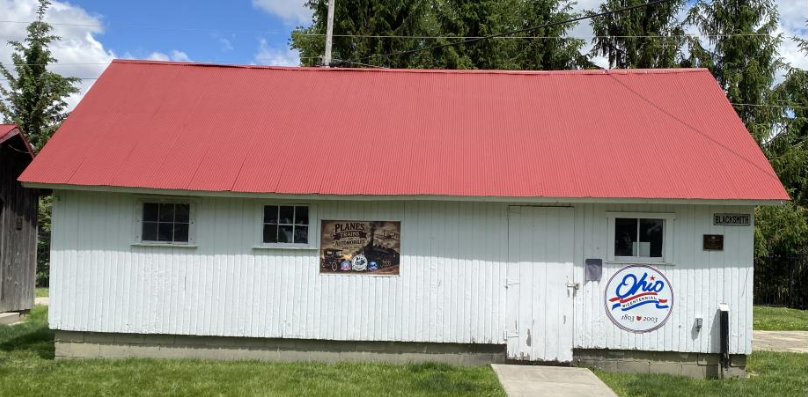
Built in 1870, the Kuhn Barn is an important part of Hilliard’s history. The barn is more than 150 years old and gives visitors a chance to learn about life on an Ohio farm during the 1800s. The barn was first located on the Kuhn family farm between Hilliard Rome Road and Walcutt Road, just north of Roberts Road. In 1988, the barn was moved to the Historical Village to help preserve Hilliard’s past. Richard and Joan Kuhn donated the barn and paid for it to be moved and restored.
Moving an old barn is not easy. Workers must carefully take apart sections of the building and rebuild them while keeping the original design. Thanks to the support of Richard and Joan Kuhn, the barn was saved and turned into an educational exhibit for the community.
In the 1800s, barns were one of the most important buildings on a farm. Farmers used them to store hay, grain, tools, and equipment. Barns also provided shelter for animals and space for many daily chores.
The Kuhn Barn was built using a method called mortise and tenon joinery. This building method connected large wooden beams without using modern nails or metal fasteners. Skilled workers carefully shaped the wood pieces so they fit tightly together. This strong design helped barns survive many years of heavy use and harsh weather.
Most farms in Ohio during this time grew crops and raised animals. Families worked hard every day to care for the farm, and the barn was the center of much of that work. One special part of the Kuhn Barn is its blacksmith display. Inside the barn is a replica blacksmith area with bellows and traditional tools. Blacksmiths were very important in rural communities during the 1800s. They made and repaired metal items such as horseshoes, plow parts, wagon pieces, and farm tools.
Blacksmiths helped farmers keep their equipment working properly. They also made parts for wagons and carriages that people used for travel and transportation, including vehicles that carried children to school.
The barn also displays many farming tools used during the 1800s. Visitors can see tools such as scythes, pitchforks, seed planters, and horse-drawn plows. Before tractors and modern machines were invented, farmers depended on hand tools and hard physical labor to plant and harvest crops. There are examples of inventions to ease the burden of farming the land. These tools and machinery help visitors understand how difficult farming was and how creative and hardworking farm families needed to be.
Today, the Kuhn Barn helps teach visitors about farming, craftsmanship, and daily life in the 1800s.