
Historical Village Log Cabin Spotlight
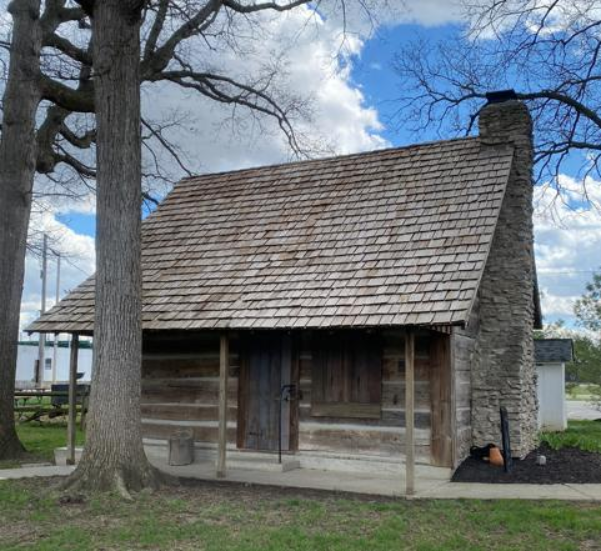
Step inside the past and experience daily life as it might have been in the Hilliard area during the mid-1800s. The Historical Village’s log cabin offers visitors a carefully reconstructed look at a typical 1850 home—simple in structure, yet rich in stories of ingenuity and survival.
Constructed in 1982, the cabin was built using the best available logs from three dilapidated structures once located on Elliott Road, Eiterman Road, and another unknown site. Interestingly, the logs were sawed flat, giving the cabin a more refined appearance than the rounded logs we often imagine. This design allowed for clapboard siding to be added later—an upgrade settlers might pursue once they could afford it. The bark was also removed from the logs, a practical step to prevent insects from damaging the wood.
At just 95 square feet, the cabin is modest in size but thoughtfully designed. It features a wooden floor on the main level—an expensive luxury at the time—and an enclosed stairway leading to an upstairs sleeping area. This staircase is a notable feature, as most cabins of the era relied on a
simple ladder and ceiling opening to access loft spaces. Today, visitors are welcome to climb the stairs and explore the upper level themselves.
Life inside the cabin required adaptation and resourcefulness. There was no running water or electricity. Light came from candles or oil lamps—both costly commodities. Windows were often covered with oiled paper instead of glass due to expense, though the cabin’s current glass panes would likely have been purchased from nearby Columbus, the closest major city. The fireplace, constructed from Olentangy limestone, serves as the heart of the home. While modern fireplace safety screens have been added in accordance with local fire regulations, they would not have been present in the 1850s.
Above the fireplace hangs a replica squirrel rifle, representative of the tools used for hunting small game. Food gathering was a family effort—young boys often used bows and arrows, while adults relied on firearms. On the mantle sits a unique artifact known as a “courting candle.” Its spiral design allowed it to burn for approximately one hour, and a father could adjust its base to determine the length of a suitor’s visit with his daughter—a practical and symbolic measure of courtship etiquette.
The cabin is furnished to reflect life in the 1860s, with many items sourced from local farms. Upstairs, a rope bed holds a mattress filled with cornhusks, though straw was also commonly used. A quilt roll at the foot of the bed provided extra warmth during cold nights. Without access to general stores, families crafted most of their necessities by hand—candles, soap, clothing, and quilts. Even food production was self-sufficient, with tools like the churn used to make butter or cheese when milk was available.
Just behind the cabin stands a historic outhouse, originally from a Hilliard backyard. Built under the Works Progress Administration, it represents a now-vanishing style of wooden architecture. Though no longer functional, it serves as a reminder of a time before indoor plumbing. Nearby, a demonstration garden showcases herbs and vegetables typical of the period, illustrating how families grew, preserved, and stored food to sustain themselves through the winter months.
Together, the log cabin and its surroundings offer more than just a look at early structures—they tell the story of resilience, creativity, and everyday life in a simpler, yet more demanding time. Visitors are invited not only to observe but to imagine what it meant to call such a place home.
